Prototypes
High Resolution Optical Power Meter:
A high resolution optical power meter is a precision device widely used for accurate optical power measurement in laboratory and industrial environments, as well as for automated optical sensing systems. Featuring 8 selectable gain levels paired with a 16-bit ADC, the meter offers high dynamic range and fine measurement granularity, enabling reliable results even in demanding optical experiments or production setups. It supports multi-wavelength operation, allowing versatile measurements as determined by the detector’s sensitivity, and is suitable for applications ranging from telecommunications and fiber optics testing to medical diagnostics and high-end industrial sensor networks. The technology is currently at TRL-6.
For more detailed specifications and performance data, read the full technical datasheet at this link.
.png)
An optical power meter is a versatile instrument widely used for link characterization in fiber optic networks, where it accurately measures signal power levels to ensure reliable network performance and integrity. Its automated sensing capabilities support smart monitoring and testing environments, while the high dynamic range enabled by logarithmic sensing allows precise detection over a broad spectrum of signal strengths. Data transfer through USB-C provides convenient connectivity for integration with automated systems and efficient reporting. The device features a substantial dynamic range, is rechargeable via USB-C for ease of use and mobility, and supports multi-wavelength operation as determined by the detector’s response characteristics. These features collectively make the optical power meter an essential tool for fiber optic link verification, maintenance, and diagnostics across telecommunications, data centers, and industrial applications. The technology is currently at TRL-6.
For more detailed specifications and performance data, read the full technical datasheet at this link.
.png)
6
Dither Free Modulator Bias Controller:
A dither free modulator bias controller is optimized for advanced applications such as analog optical links and optical single-sideband (SSB) generation, where maintaining precise bias control is crucial for signal integrity and high performance. The controller enables any-point operation, allowing users to select and maintain specific bias points across the modulator’s transfer function to suit various signal processing requirements. Its design is inherently expandable to multi-channel configurations, supporting complex systems or multi-path optical network setups. Multi-wavelength operation is possible simply by changing detectors, which makes the system highly versatile for broadband applications. Critically, true dither free operation ensures that the controller is well suited for high dynamic range optical links, as it avoids adding modulation artifacts and enhances measurement clarity and signal quality in demanding environments such as precision communications, advanced research, and automated test setups. The technology is currently at TRL-5.
For more detailed specifications and performance data, read the full technical datasheet at this link.
.png)
6
Multichannel Dither-Free Modulator Bias Controller:
The Multichannel Dither-Free Modulator Bias Controller developed by the OCEAN Lab, IIT Madras provides precise and stable bias control for optical modulators in high-dynamic-range analog optical links. It supports any-point, dither-free operation, multi-wavelength systems, and up to three cascaded or two parallel modulators with reduced hardware complexity. With fast settling time, high lock precision, and support for standard operating points, the controller is well suited for frequency up-conversion and frequency-comb–based photonic systems and is currently validated at TRL-5. For more detailed specifications and performance data, read the full technical datasheet at this link.
.png)
6
Electronic Variable Optical Attenuator:
The Electronic Variable Optical Attenuator (EVOA) developed at AOC Testbed, IIT Madras, is a compact and high-precision solution for accurate optical power control in advanced photonic systems. Designed for laboratory and field use, the attenuator offers a wide attenuation range of up to 40 dB and 80 dB with an ultra-fine resolution better than 0.01 dB, enabling precise and repeatable measurements. It supports multi-wavelength operation, handles optical input powers up to +27 dBm, and delivers a fast response time of less than 10 ms. The device features both manual control through an intuitive rotary dial and remote operation via a USB-C interface, along with USB-C rechargeable power, ensuring ease of use and portability. The technology is currently at TRL-5. For more detailed specifications and performance data, read the full technical datasheet at this link.

6
Analog Radio over Fiber is a high-performance RF/IF signal transport solution developed by IIT Madras in collaboration with SFO Technologies. It supports 4 channels with 100–4000 MHz bandwidth, positive link gain, and high linearity.
The system uses ITU WDM grid channels with a hybrid optical design—C-band for analog data and 1310 nm for digital data. It has been demonstrated at 3.2 GHz RFoF, 3.2 GHz IFoF for 26.6 GHz mmWave, and in a 5G over-the-air testbed, achieving TRL-5 readiness. For more detailed specifications and performance data, read the full technical datasheet at this link.
.png)

6
On-demand optical spectral inverter:
The On-Demand Optical Spectral Inverter from IIT Madras is a versatile optical module for core networks, offering three selectable modes—spectral inverter, amplifier, and transparent. Operating in the 1530–1560 nm band, it provides 12–21 dB gain, low OSNR penalty, and high dispersion tolerance, making it ideal for mid-span dispersion and nonlinearity mitigation. The solution supports high-speed coherent signals and is currently at TRL-4. For more detailed specifications and performance data, read the full technical datasheet at this link.

6
The L-Band Amplifier developed by the AOC Testbed, IIT Madras is designed to extend optical network capacity by efficiently utilizing L-band wavelengths (1570–1610 nm). Integrated with EDFA technology, it supports high-speed data transmission with high output power and stable performance.
The amplifier delivers >25 dB gain with an output saturation power of ~13 dBm, operating over a wide input range of –20 to 0 dBm. Key features include a wide dynamic range, FC/APC connectors, and a front-panel display with pump controller for easy monitoring and control. The system is validated at Technology Readiness Level (TRL) 5, making it suitable for advanced optical communication networks
For more detailed specifications and performance data, read the full technical datasheet at this link.

6
The Optical Frequency Comb developed by the OCEAN Lab, IIT Madras is a compact and tunable photonic source designed for high-capacity and precision optical applications. It operates across both the C-band (1530–1565 nm) and L-band (1565–1625 nm), with a tunable free spectral range up to 25 GHz. The system generates 13 highly phase-correlated comb lines with >40 dB carrier-to-noise ratio and ~3 dB spectral flatness, ensuring stable and robust performance. With centre wavelength and comb spacing tunability, the OFC serves as an enabling technology for high-speed data transmission, millimetre-wave and 5G/THz signal generation, spectroscopy, precision metrology, and terabit super-channel transmitters. The technology is currently at TRL-4
For more detailed specifications and performance data, read the full technical datasheet at this link.


The Optical Parametric Amplifier developed by the OCEAN Lab, IIT Madras is a low-noise, high-performance optical amplifier designed for advanced communication and photonic signal processing applications. Operating in the C-band (1530–1560 nm) and extendable to the S and L bands, it delivers >10 dB gain with a noise figure ≤ 3 dB. The OPA supports phase-sensitive amplification and phase squeezing, making it suitable for next-generation optical networks and research applications. Key features include polarisation-insensitive operation, a 19” × 2U rack-mountable form factor, USB communication interface, and FC/APC connectors. The system is currently at Technology Readiness Level (TRL) 4.
For more detailed specifications and performance data, read the full technical datasheet at this link.

6
The Recirculating Loop developed by the AOC Testbed, IIT Madras is a compact and cost-effective platform for long-haul optical transmission testing. It enables continuous and controlled circulation of optical signals, allowing realistic emulation of long-distance fiber links within a laboratory environment.
The system operates around 1550 ± 25 nm and supports configurable loop lengths from 10 to 100 km, with up to 248 recirculations, all managed through an intuitive graphical user interface. With low insertion loss (< 6 dB) and low polarization-dependent loss (< 0.5 dB), it ensures accurate system characterization. The solution is portable, easy to deploy, and validated at Technology Readiness Level (TRL) 6, making it well suited for advanced optical network research and testing
For more detailed specifications and performance data, read the full technical datasheet at this link.
.png)
6
Automatic Polarization Aligner:
The Automatic Polarization Aligner developed by the OCEAN Lab, IIT Madras is an adaptive solution for precise polarization control in polarization-dependent optical systems. It automatically adjusts the state of polarization to meet device requirements, improving system stability and performance.
Operating in the 1530–1560 nm range (extendable to S and L bands), the system offers fine correction resolution of 0.1 dB with an average alignment time of ~34 seconds. Powered by a customized Stochastic Parallel Gradient Descent (SPGD) algorithm, it supports flexible angle optimization (0°, 45°, 90°) and provides Ethernet or wireless communication interfaces. The solution is currently at Technology Readiness Level (TRL) 4, making it suitable for advanced research and experimental optical setups
For more detailed specifications and performance data, read the full technical datasheet at this link.

6
Fan In Fan Out (FI/FO) device:
The Fan-In Fan-Out (FI/FO) device developed by the OCEAN Lab, IIT Madras, in collaboration with SFO Technologies, enables efficient coupling between standard single-mode fibers (SMF) and multi-core fibers (MCF) for next-generation optical networks.
Operating in the C-band (1520–1560 nm), the device offers low insertion loss (< 1 dB), very low polarization-dependent loss (< 0.1 dB), and excellent crosstalk performance (< –45 dB). Its bidirectional operation makes it ideal for high-capacity optical communication systems and data centre & cloud infrastructure, where multiple SMF signals can be seamlessly integrated into MCF cores. The technology is currently at TRL-4.
For more detailed specifications and performance data, read the full technical datasheet at this link.

6
Optical Frequency Comb is a photonic source that generates multiple evenly spaced wavelengths around 1550 nm (C-band) with 12.5 GHz channel spacing, enabling high-capacity WDM optical communication and microwave photonics applications.
It supports applications such as high-capacity fiber links, GHz-rate pulsed optical sources, Radio-over-Fiber (RoF), and sensing, with stable comb generation and high extinction ratio (>25 dB per line).
The technology is currently at TRL-4.
For more detailed specifications and performance data, read the full technical datasheet at this link.

6
Reconfigurable Optical Filter:
NADAVYUHA Reconfigurable Optical Filter is a tunable C-band optical filtering system that enables dynamic wavelength channel selection, gain equalization, and spectrum shaping for advanced optical communication systems. With 30 MHz–1 GHz bandwidth, 30 MHz resolution, and >20 dB gain, it supports applications such as microwave photonics, dynamic spectrum control, and optical network research and development.
The technology is currently at TRL-4. For more detailed specifications and performance data, read the full technical datasheet at this link.

6
QKD Network Security enables ultra-secure key distribution using dynamic optical path switching between quantum channels, ensuring continuous secure communication even if one channel is compromised.
The system includes real-time monitoring, automatic attack detection (Trojan horse and fiber tampering), and MEMS-based switching, supporting secure communications for defense networks, government data protection, and distributed data centers. The technology is currently at TRL-6.
For more detailed specifications and performance data, read the full technical datasheet at this link.

6
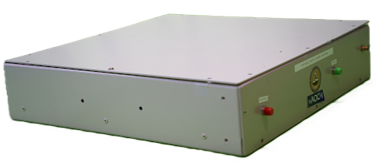
Optical Pulse Picker System enables precise selection of optical pulses from pulsed laser sources, supporting applications such as precision timing, synchronization, laser micromachining, and optical measurement.
The system handles ultra-short pulses (~1 ps) with high extinction ratio (>34 dB) and operates over repetition rates from 500 kHz to 50 MHz, ensuring accurate pulse control and signal isolation.
The technology is currently at TRL-4.
For more detailed specifications and performance data, read the full technical datasheet at this link.
6
Laser Phase Noise Analyzer is a measurement system that accurately estimates laser phase and frequency noise power spectral density from very low frequency offsets, enabling precise laser characterization.
Operating in the 1530–1560 nm wavelength range with frequency offsets from 1–250 MHz, it supports applications such as optical metrology and narrow-linewidth laser development.
The technology is currently at TRL-4.
For more detailed specifications and performance data, read the full technical datasheet at this link.
.png)
6
Crosstalk Meter is a high-precision measurement system designed for inter-core crosstalk analysis in Multi-Core Fiber (MCF), enabling accurate monitoring and evaluation of signal interference.
With >65 dB dynamic range, 0.01 dB resolution, and programmable core switching, it supports automated crosstalk monitoring, logging, and advanced optical network testing applications
The technology is currently at TRL-4.
For more detailed specifications and performance data, read the full technical datasheet at this link.

6
Free Space Optics (FSO):
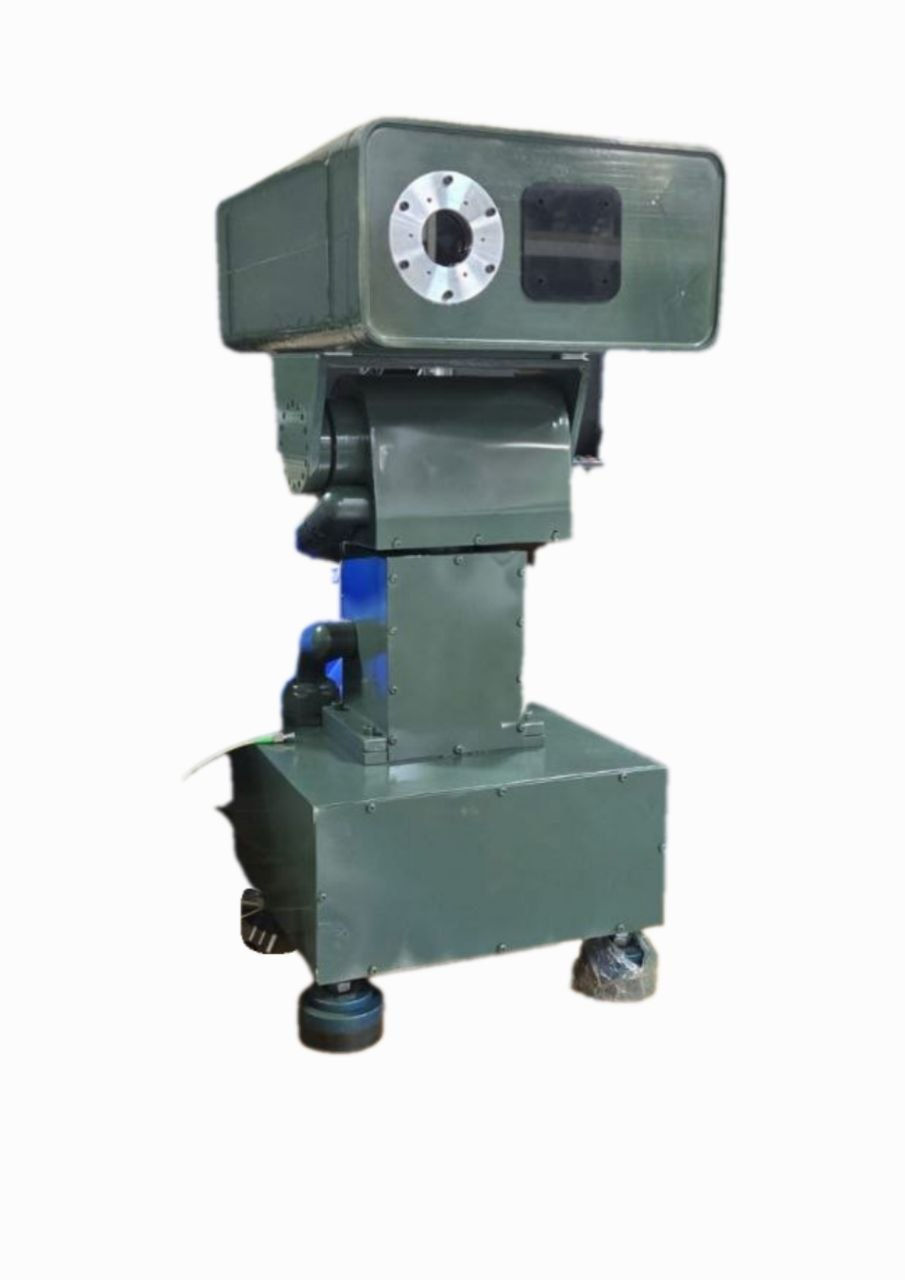
The Free Space Optical (FSO) Communication System is a high-speed, turbulence-resilient optical wireless communication platform designed to provide reliable broadband connectivity in challenging and infrastructure-deficient environments. Operating in the C-band, the system supports data rates of up to 10 Gbps over distances of up to 20 km under clear weather conditions, with a link reliability of 99% and a link establishment time of less than 30 minutes. The solution utilizes laser-based transmission to enable secure, license-free, and low-power wireless communication while maintaining a compact and lightweight transceiver design. Its rapid deployment capability and resilience to atmospheric disturbances make it suitable for applications such as rural broadband connectivity, campus and inter-building networks, disaster recovery communications, defence and border communication systems, and wireless surveillance networks. The technology is currently at TRL-6.
6
The 5G C-RAN Fronthaul Solution is an Analog Radio-over-Fiber (ARoF)-based platform developed for next-generation 5G communication networks. Operating in the FR2 (n258) band (24.25–27.5 GHz) with a bandwidth of 400 MHz, the system supports 2T2R MIMO architecture and is scalable to 4T4R configurations. It enables efficient 5G fronthauling through DWDM-based optical transmission and complies with ITU-T G.9803 and TEC 71130:2023 standards. The solution is suitable for applications such as 5G C-RAN, Active Distributed Antenna Systems (DAS), MIMO ARoF links, and wireless network reach extension. The technology is currently at TRL-7.
For more detailed specifications and performance data, read the full technical datasheet at this link.


6
Dual-Port 112 Gbps Retimer Chip:
The Dual-Port 112 Gbps Retimer Chip, developed by Signalchip for next-generation optical and networking systems. The chip supports both NRZ and PAM4 modulation formats, featuring Forward/Reverse Gearbox, FEC Encoder/Decoder, adaptive bandwidth control, jitter optimization, on-chip testing, loss-of-signal detection, per-lane eye monitoring, and an I2C control interface for reliable high-speed data transmission.
Applications: Suitable for 100GBASE-LR4 Ethernet, OTN OTU4 optical transport networks, high-speed optical communication systems, and data center interconnect applications.
For more detailed specifications and performance data, read the full technical datasheet at this link.

6
QSFP28 100GBASE-LR4 1310 nm 10 km Optical Transceiver (ST QSFP28-LR4-100G):
A hot-pluggable QSFP28 100GBASE-LR4 optical transceiver designed for high-speed optical communication, supporting an aggregate data rate of 103.1 Gb/s over 10 km single-mode fiber (SMF). The module features a 4×25 Gb/s NRZ interface, LAN-WDM transmitter, built-in digital diagnostics, internal CDR circuits, and an I2C management interface for reliable and efficient data transmission.
Applications: Suitable for IEEE 802.3ba 100GBASE-LR4 Ethernet networks, data center interconnects, telecom networks, and high-speed optical communication systems.
For more detailed specifications and performance data, read the full technical datasheet at this link.

6